HarborStone Pest Care provides structured, low-impact pest control service in Columbus to preserve the sanitary baseline of residential dwellings and managed properties. Discovering indoor activity or structural wood damage creates immediate household disruption that requires clinical, measured intervention rather than indiscriminate chemical spraying.
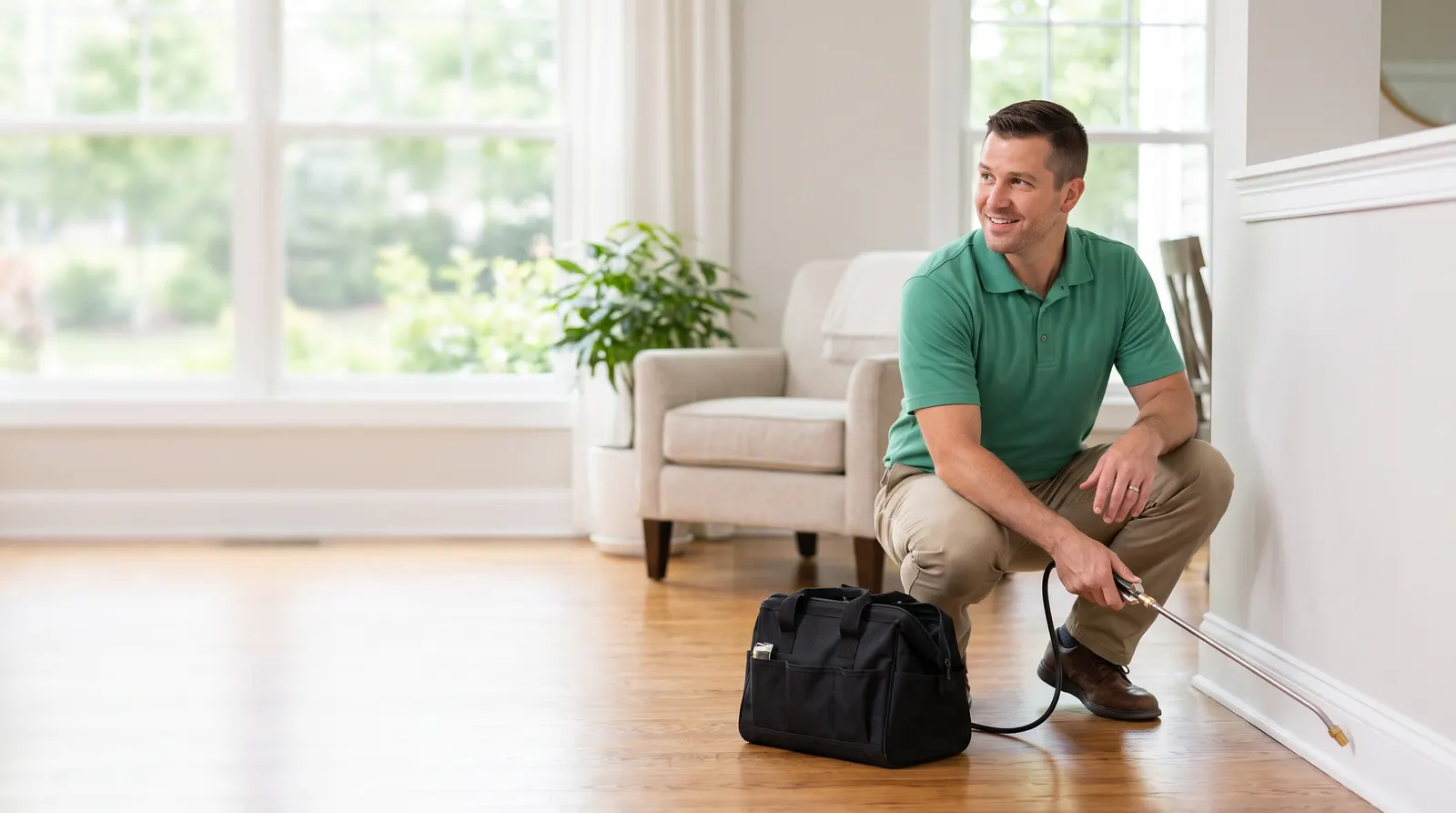
A pest control service in Columbus is a specialized residential and commercial hygiene protocol that detects, eliminates, and mechanically excludes insect and rodent populations from buildings across Franklin County.
Every service reflects the same meticulous attention to detail, whether it's a single job or a larger pest control sevice project across Columbus.
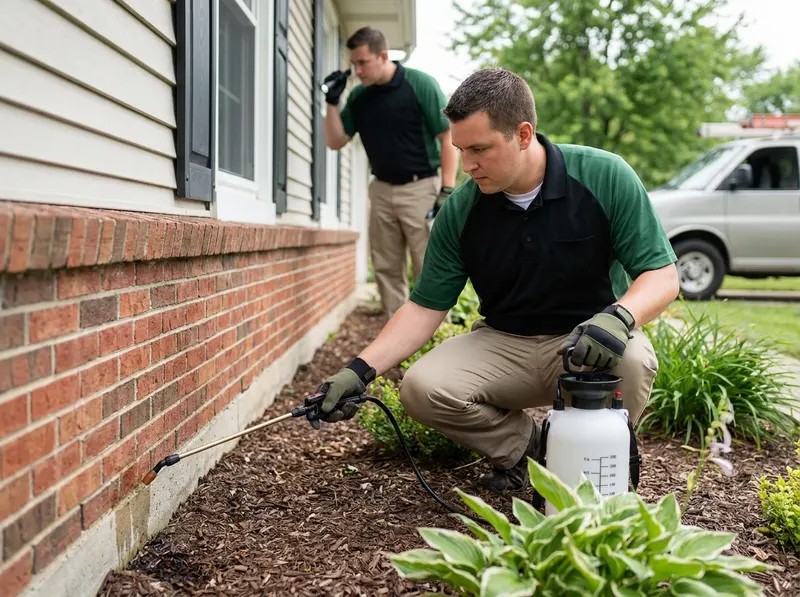
A comprehensive protective perimeter treatment targeting house ants, field crickets, cellar spiders, centipedes, and silverfish around exterior ground points, window frames, and interior baseboard perimeters. Applications utilize micro-encapsulated pyrethroid formulations verified by the EPA Pesticides Program alongside botanical perimeter repellents that dry odorless. Technicians execute a six-foot exterior perimeter band up foundation walls and out across surrounding soil to halt insect migration. The baseline fee starts at $200 for residential footprint coverage up to 2,000 square feet.
Get a quote →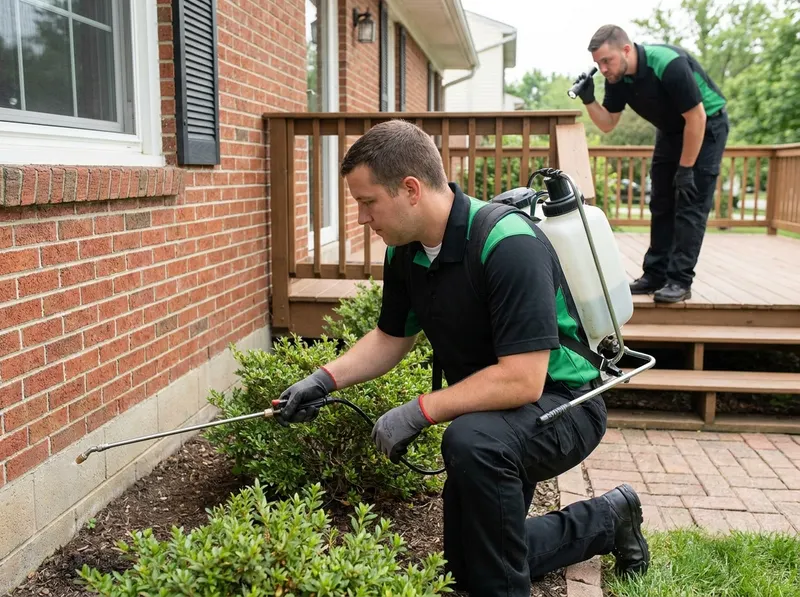
A structured quarterly maintenance plan establishing sequential barrier shields aligned with Central Ohio seasonal weather shifts. Technicians inspect crawl spaces, treat sub-slab pipe chases, refresh tamper-resistant rodent monitoring stations, and apply micro-encapsulated perimeter barriers every ninety days. This ongoing rotation interrupts pest reproductive cycles across changing spring moisture, summer humidity, and autumn overwintering surges, protecting homes against thirty-six common Midwestern household pests without continuous indoor chemical broadcast spraying.
Get a quote →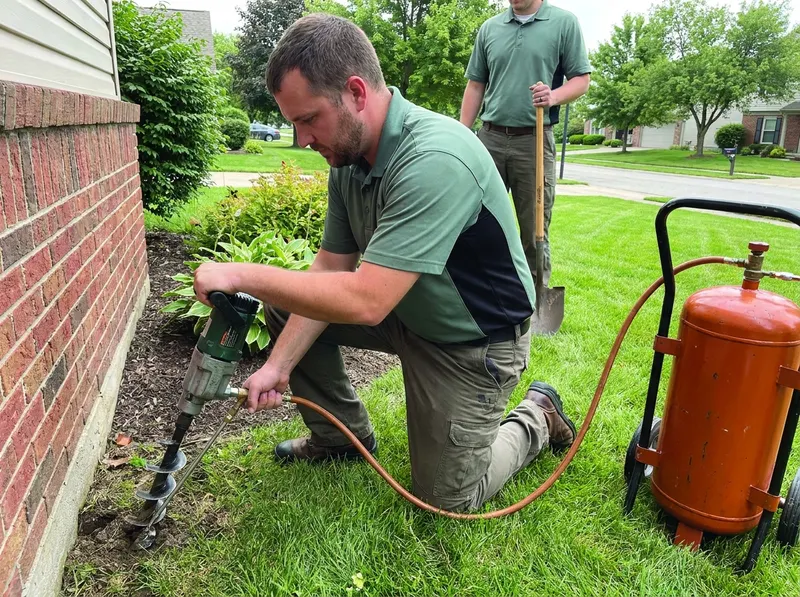
Targeted liquid soil barrier defense and interior baiting systems engineered specifically for Reticulitermes flavipes , the primary subterranean termite species in Franklin County. Treatments conform to structural wood protection guidelines outlined by the Ohio Department of Agriculture Pesticide Regulation , treating trench lines along foundation perimeters with non-repellent termiticides at a concentration of 0.06% active ingredient to eliminate foraging colonies before structural framing timbers suffer permanent cellular degradation.
Get a quote →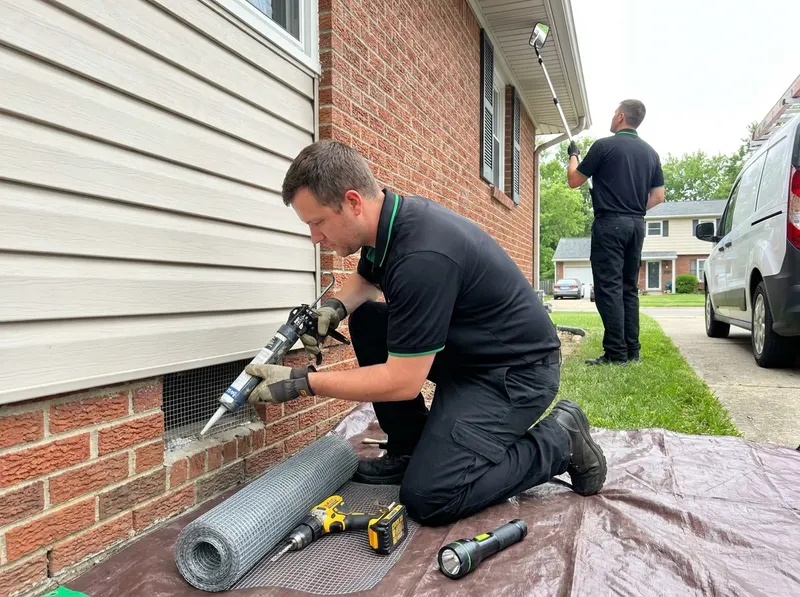
Mechanical sealing of exterior penetrations larger than one-quarter inch combined with clinical interior trapping protocols to eradicate mice and rats. Technicians seal foundational weep holes, utility wire entries, and garage door weatherstripping using heavy-gauge welded steel wire mesh, copper mesh, and elastomeric caulks. Application of secured, tamper-resistant exterior bait stations adheres strictly to commensal rodent containment standards established by the CDC Rodent Control Division , ensuring zero domestic pet exposure.
Get a quote →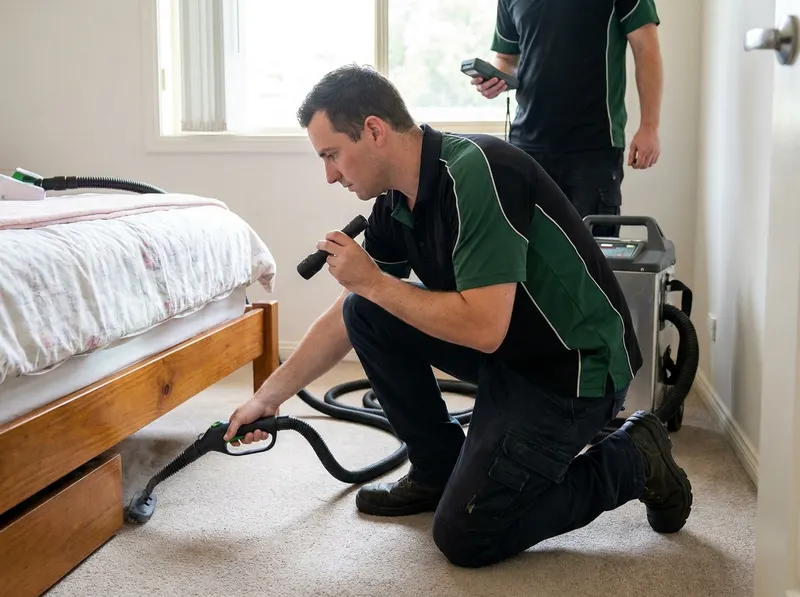
Targeted thermal contact applications combined with amorphous silica dust desiccant injected directly into wall cavities, mattress box springs, and electrical junction boxes. Protocols follow non-chemical and targeted chemical management frameworks verified by the Department of Entomology at Michigan State University , eradicating both adult bed bugs and egg clusters without leaving harmful airborne residues in family sleeping quarters.
Get a quote →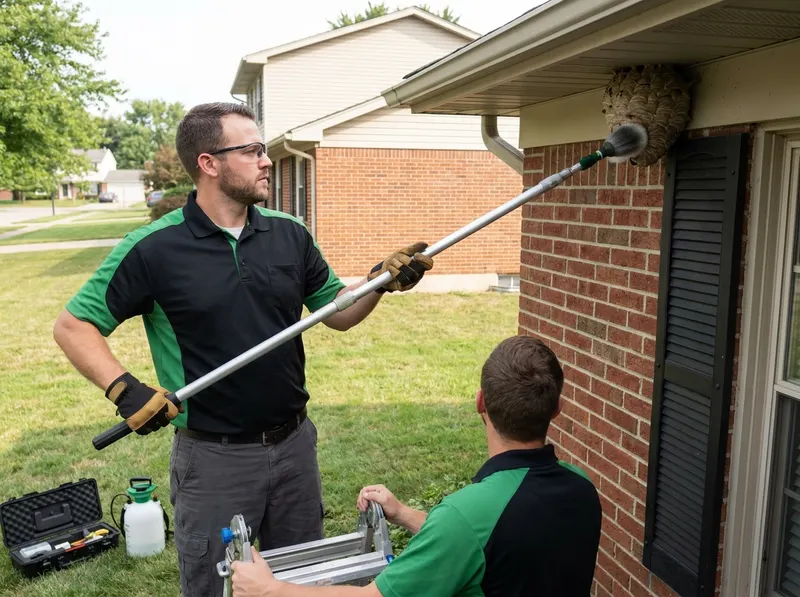
Surgical physical removal and targeted localized eradication of bald-faced hornet, yellowjacket, paper wasp, and mud dauber nests from roof eaves, exterior siding, chimney caps, and attic soffits. Physical removal paired with direct aerosol pyrethrin knockdown eliminates aerial hazards without generating toxic chemical drift into interior attic vents or open family outdoor gathering spaces.
Get a quote →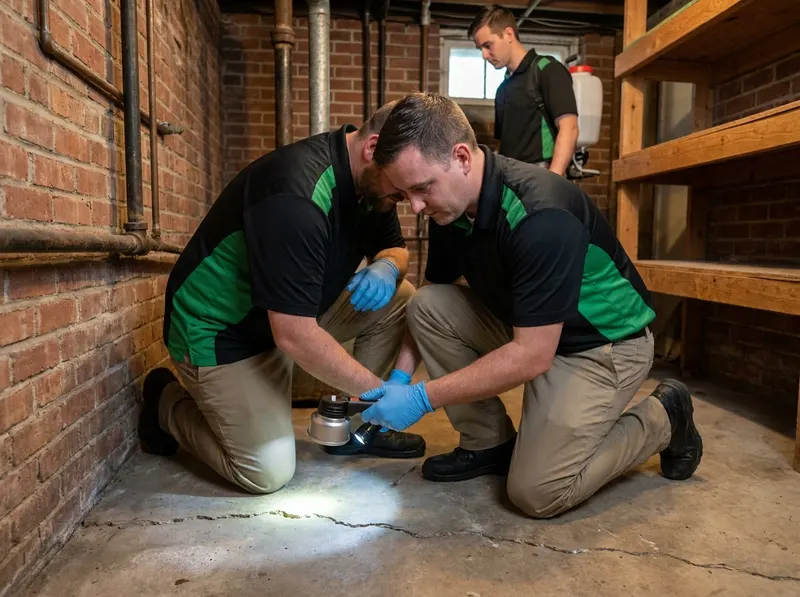
Clinical cleanouts targeting German, American, and Oriental cockroaches utilizing precise gel baits, insect growth regulators (IGRs), and crack-and-crevice bait placement. Chemical guidance aligns with standard integrated pest management protocols published by the National Pest Management Association , denying reproducing insects food resources and disrupting chitin synthesis in high-moisture kitchen plumbing voids and bathroom wall chases.
Get a quote →Species-specific elimination protocols designed for odorous house ants, pavement ants, and wood-nesting carpenter ants. Technicians deploy slow-acting liquid and gel baits containing indoxacarb or hydramethylnon, allowing worker ants to carry the formulation back into central subterranean or wall-void nests. This colony-level transfer halts satellite nest expansion without provoking bud-off splintering.
Get a quote →You get a firm, itemized quote for your pest control sevice before any work begins, no surprises, no pressure.
Careful prep, tidy work, and a full cleanup when we are done. We treat your home and belongings like our own.
The same trusted, background-checked team from the first call to the final check.
Selecting the right pest control approach depends on whether a property faces an active, isolated biological infestation or requires continuous perimeter defense against migrating suburban wildlife. If you want immediate remediation for an active swarm of pavement ants in a galley kitchen, localized paper wasp nests under second-story gutters, or sudden pantry moth activity in food storage shelving, choose a targeted single-treatment intervention. If you want year-round prevention against persistent structural invaders such as the eastern subterranean termite, the German cockroach, or the Norway rat, choose a scheduled four-season perimeter management plan.
The trade-off is upfront cost versus ongoing structural resilience: single-visit remediation carries a lower initial outlay starting at $200 but lacks prolonged chemical residual barriers after sixty to ninety days, leaving the structure vulnerable to recurring seasonal waves. A structured recurring agreement ensures continuous barrier replenishment and exterior monitoring every ninety days, though it requires an ongoing quarterly financial commitment. For properties with mature stone foundations in Victorian Village or damp crawl spaces near the Olentangy River, continuous structural monitoring mitigates subterranean moisture and foundation settling issues that single treatments cannot permanently address.
If you manage a rental property undergoing turnover, a single cleanout resolves immediate tenant disputes, whereas long-term owner-occupied historic structures benefit substantially from scheduled quarterly perimeter monitoring.
Every project gets a firm, written price after an on-site visit. Ranges below for orientation.
Tell us about your pest control sevice job and we'll send a clear, written quote, usually the same day. Or just call and talk to a real Columbus pro.
(380) 255-6018
Properties across Franklin County face distinct biological pest pressures directly linked to the damp riparian corridors of the Olentangy and Scioto Rivers. Older rubblestone, fieldstone, and soft lime-mortar brick foundations common throughout German Village, Victorian Village, and Olde Towne East allow ground moisture to wick upward, drawing subterranean termites and carpenter ants directly into load-bearing mudsills. Furthermore, historic neighborhoods with mature canopy trees near Whetstone Park of Roses and Clintonville Ravines experience intense seasonal rodent pressure when autumn temperatures drop below forty degrees Fahrenheit, driving white-footed mice and Norway rats into older stone crawl spaces, uncaulked roofline returns, and historic chimney flashings. Newer residential construction in Grandview Heights, Bexley, and Upper Arlington frequently contends with brown marmorated stink bugs and boxelder bugs penetrating vinyl siding gaps and soffit transitions during September and October. Managing these diverse conditions across Franklin County requires adjusting chemical formulation viscosity, exclusion mesh gauge, and bait placement to align with local soil moisture, regional freeze lines, and specific residential building materials.
 HarborStone Pest Care