Residential sanitation relies on physical exclusion and precise residual perimeter placement rather than aerosolized chemical dousing. In historic brick foundations throughout German Village, Victorian Village, and…
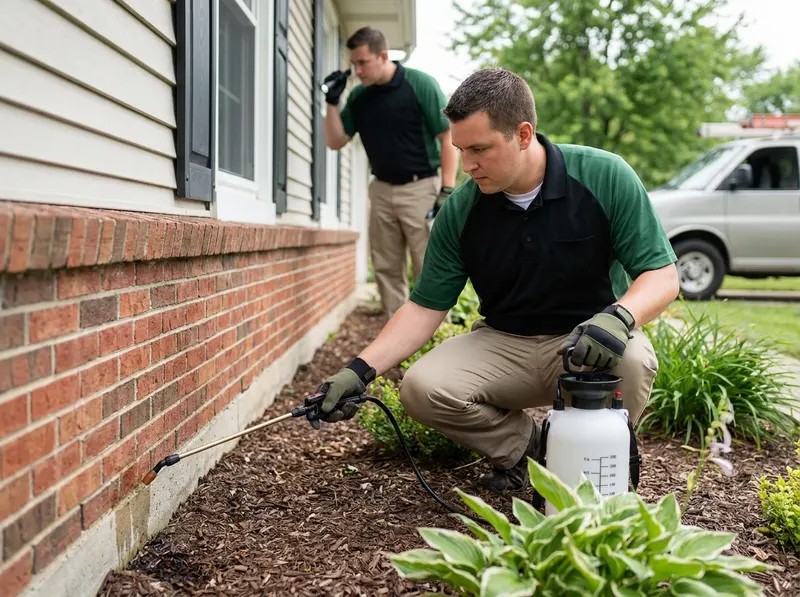
Residential sanitation relies on physical exclusion and precise residual perimeter placement rather than aerosolized chemical dousing. In historic brick foundations throughout German Village, Victorian Village, and Olde Towne East, mortar degradation and low crawl spaces present direct pathways for subterranean species. HarborStone Pest Care establishes protective, non-staining micro-encapsulated shields along foundation perimeters following guidelines from the U.S. Environmental Protection Agency. Ground-level vegetation and older structural footings in neighborhoods like Clintonville and Worthington frequently trap moisture against limestone blocks. By applying targeted pyrethrin derivatives registered with the Ohio Department of Agriculture, technicians arrest perimeter populations before pests migrate toward food prep surfaces or disrupt nighttime sleep inside interior drywall.
Structural layout dictates method. A detached single-family home in Upper Arlington or Bexley with mature hardwood canopies presents ant and spider pathways along gutter lines, requiring perimeter foundation sweeps and exterior soffit checks conforming to the National Pest Management Association structural integrity benchmarks. In dense urban streetscapes near the Short North Arts District or Grandview Heights, adjacent masonry walls and shared property borders complicate boundary defense. The process emphasizes physical barrier defense: Step 1 involves identifying primary ingress cracks along foundation walls; Step 2 targets pipe chases and utility entry points using dry non-volatile dust formulations compliant with Occupational Safety and Health Administration residential worker safety rules; Step 3 places non-attractant insect growth regulators under appliances; Step 4 lays a 36-inch broad barrier outward from the stem wall; and Step 5 establishes moisture monitoring across crawl entryways according to structural preservation protocols outlined by the International Association of Certified Home Inspectors.
Choosing general pest control means prioritizing continuous ambient prevention over acute, intensive structural cleanouts. A targeted single-species remediation fits an active wood-boring emergency or active bedbug issue, whereas general maintenance covers seasonal shifts in common invaders without filling home interiors with harsh chemical odors. The trade-off centers on scope: generalized treatments safely stabilize common perimeter insects but do not eradicate deep-seated termite colonies inside load-bearing framing, which require specialized sub-slab injection under standards from the U.S. Department of Housing and Urban Development. Homeowners managing brick row houses in Franklinton or modern slab constructions along the Scioto river valley receive targeted, non-disruptive barrier applications that safeguard indoor living areas without high-pressure recurring sales contracts. Environmental handling adheres strictly to disposal and run-off limitations published by the Ohio Environmental Protection Agency, water preservation mandates from the U.S. Geological Survey, and animal enclosure safety recommendations established by the Association of Zoos and Aquariums to ensure safety near domestic pets and local wildlife corridors.
Every job gets a firm, written price after an on-site visit.
Tell us about your general pest control job in Columbus and we'll send a clear, written quote, usually the same day.
 HarborStone Pest Care