Subterranean termite remediation in Columbus addresses the destructive activity of Reticulitermes flavipes , the native Eastern subterranean termite common throughout central Ohio. In moisture-retaining soils along the…
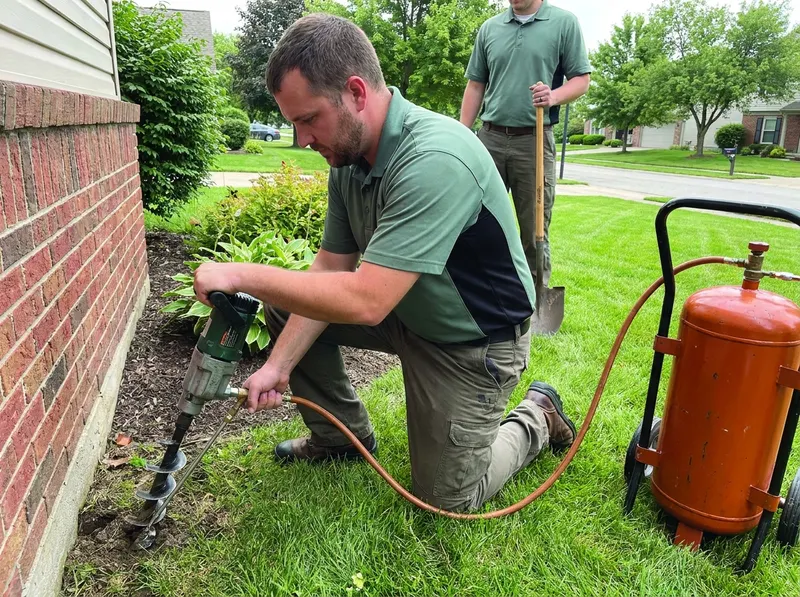
Subterranean termite remediation in Columbus addresses the destructive activity of Reticulitermes flavipes, the native Eastern subterranean termite common throughout central Ohio. In moisture-retaining soils along the Olentangy River basin and dense residential pockets from Clintonville to Victorian Village, subterranean colonies tunnel through soil beneath masonry to target untreated pine framing. Remediating an active infestation relies on creating continuous protective zones rather than indiscriminate spraying. Liquid non-repellent termiticides bind directly to soil particles around foundation stems, transferring the undetectable active agent throughout subterranean nesting networks to arrest colony expansion. In older brick-and-timber structures in German Village or Olde Towne East, soil injection often combines with internal slab trenching to halt hidden travel tubes behind historical limestone walls.
Sustained wood protection requires structured application standards outlined by the U.S. Environmental Protection Agency and strict adherence to structural safety guidelines managed by the Ohio Department of Agriculture. Step 1 begins with identifying shelter tubes, moisture plumes, and wood fiber destruction across foundation perimeters. Step 2 requires trenching exposed soil 6 inches wide and 6 inches deep around foundation footings. Step 3 introduces specialized low-pressure injection equipment to saturate backfill with non-repellent formulations at precise label-directed gallons per linear foot. Step 4 seals any expansion joints, utility voids, and porch slabs using undetectable sub-slab injection drills. Step 5 installs discreet, low-profile soil monitoring capsules flush with turf along the home perimeter to verify ongoing safety without invasive chemical disruption.
Choosing full perimeter remediation instead of isolated spot patching depends on structural design and infestation age. A targeted spot treatment may address a minor, single sill plate compromise near a leaky hose bib in Grandview Heights, but subterranean networks typically utilize multiple foundation entry fissures simultaneously. Spot treating one structural corner leaves remaining sill plates undefended; a continuous perimeter barrier shields the entire footprint at an initially higher layout, protecting long-term real estate equity under standards evaluated by the U.S. Department of Housing and Urban Development. Structural moisture management guidance from the International Association of Certified Home Inspectors confirms that remediation should always pair with resolving plumbing leaks and poor downspout redirection. HarborStone Pest Care uses clean, low-disturbance equipment to administer discreet environmental shielding without invasive turf destruction. Call (380) 255-6018 to arrange an on-site property review.
Every job gets a firm, written price after an on-site visit.
Tell us about your subterranean termite remediation job in Columbus and we'll send a clear, written quote, usually the same day.
 HarborStone Pest Care